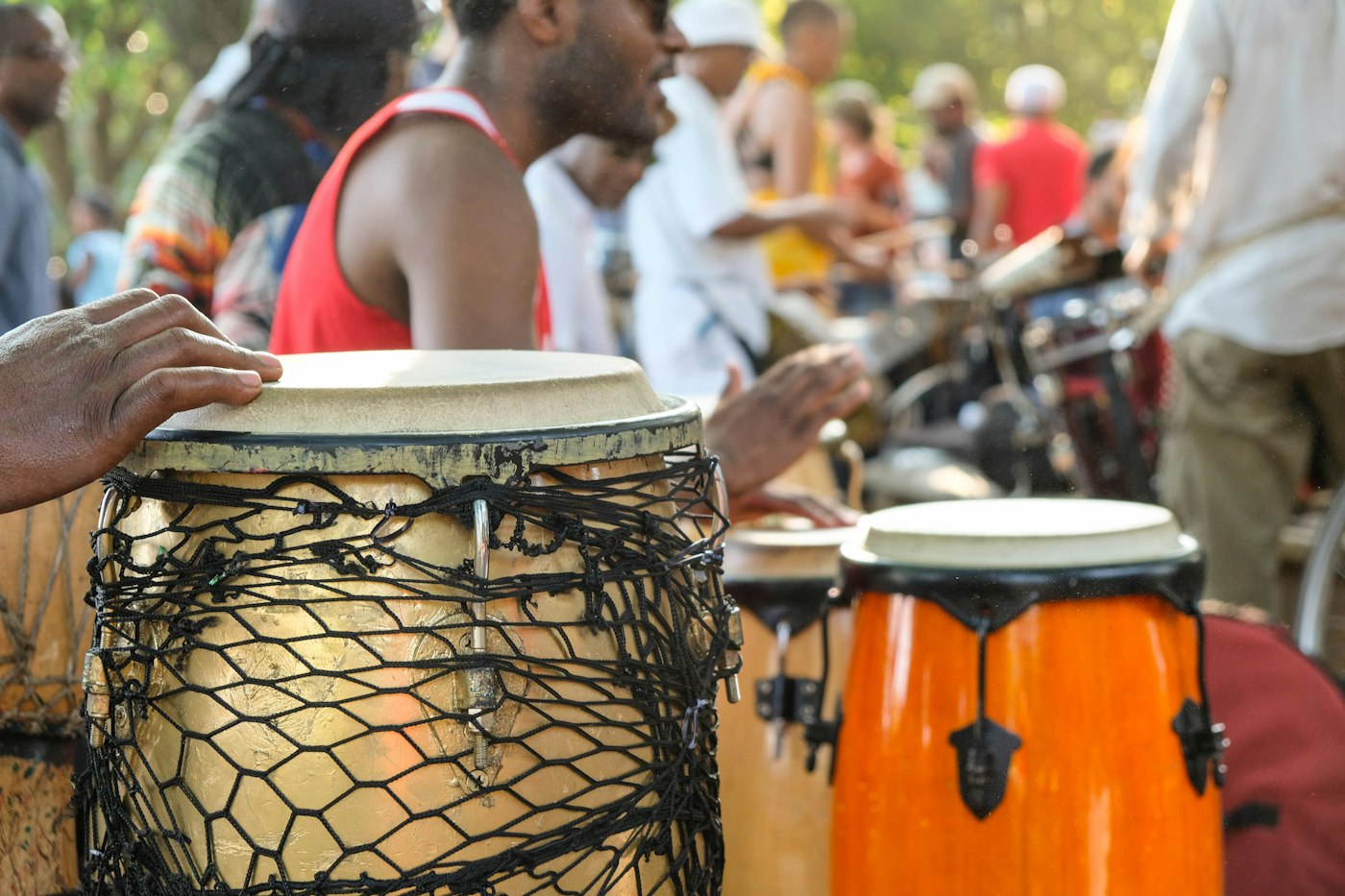
A good first gathering is only the beginning. People come back when they feel welcomed, useful and excited about what they might learn next.
Understanding the Rhythm
Recurring circles benefit from familiar opening rituals, rotating leaders and room for newcomers. Consistency provides structure without making the activity rigid.
Some drumming practices are rooted in specific cultures and ceremonies. A welcoming community can create original learning exercises while crediting musical influences and avoiding the casual imitation of protected or sacred traditions.
Try the Rhythm
- Choose a predictable thirty-minute format: five-minute warmup, ten-minute shared pulse, ten-minute experimentation and five-minute closing.
- Post the basic outline in advance and invite one volunteer to lead a segment each month.
Keep an optional suggestion notebook. Ask about instrument availability, start times, accessibility and the sound level. Make the feedback visible through small changes at the next meeting.
Have a partner listen from several steps away. Ask whether quieter instruments can still be heard and whether people could comfortably talk nearby.
What to Keep in Mind
Respect local sound rules, protect hearing and avoid creating an insider culture that requires expensive gear or previous attendance.
Repetitive percussion can be physically or emotionally intense. Keep volumes reasonable, take breaks, protect hearing when needed, and respect cultural contexts. Claims that one beat reliably heals a disease or induces a precise brain state are not established.