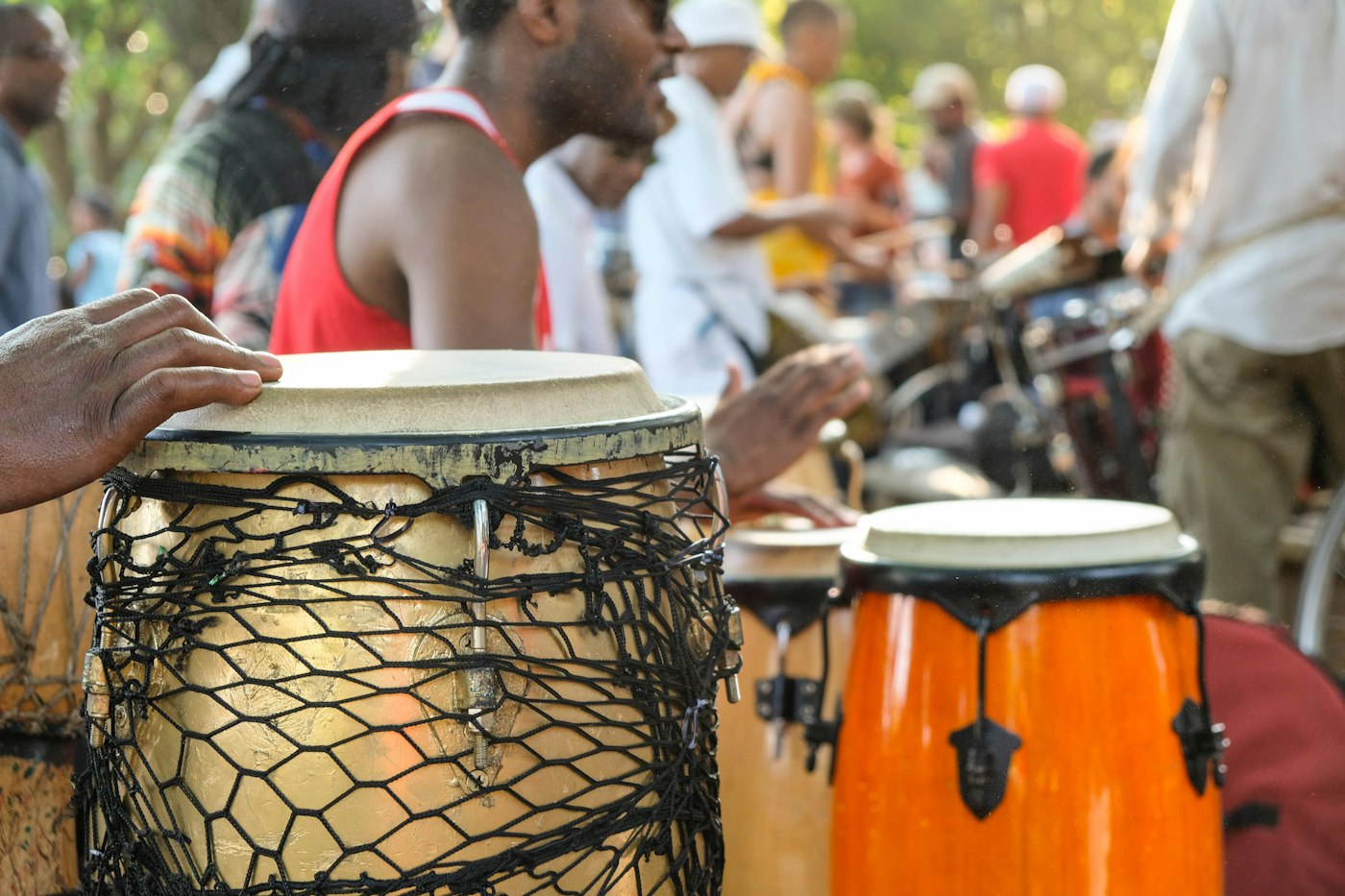
Before there is a conversation, there can be an answer. Call-and-response drumming lets people take turns leading without needing words.
Understanding the Rhythm
Musical call and response appears across many traditions, with distinct histories that deserve respect. A beginner circle can use original clapping phrases rather than copying ceremonial patterns.
Rhythm is both musical and social. People learn to hear a shared pulse, leave space, adjust their volume and recover together from mistakes. Those are practical group skills even when no one describes the experience as spiritual.
Try the Rhythm
- A leader taps four simple beats and everyone repeats them once.
- Make the phrase gradually more varied: two slow taps and two quick taps, for example.
- Rotate the leader every three rounds.
Allow gestures and quiet knee-tapping as valid responses. Invite the group to echo mood as well as rhythm—gentle, playful or thoughtful—without asking anyone to reveal private feelings.
Have a partner listen from several steps away. Ask whether quieter instruments can still be heard and whether people could comfortably talk nearby.
What to Keep in Mind
Do not imitate sacred rhythms or misrepresent cultural origins. Keep volumes manageable and let participants pass their turn without explanation.
Repetitive percussion can be physically or emotionally intense. Keep volumes reasonable, take breaks, protect hearing when needed, and respect cultural contexts. Claims that one beat reliably heals a disease or induces a precise brain state are not established.