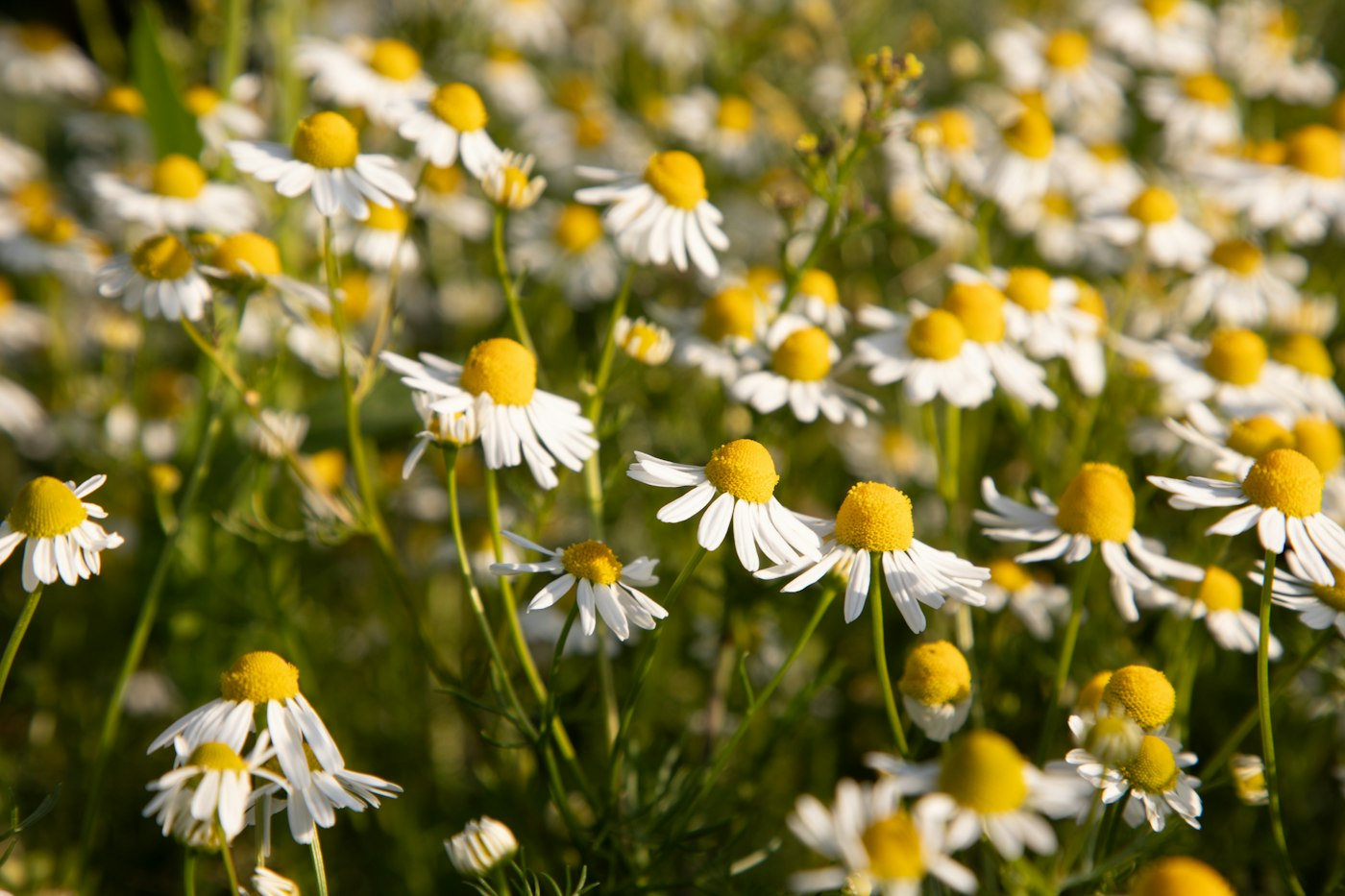
Chamomile is synonymous with a sleepy evening for many people. Its gentle reputation can make real botanical differences easy to miss.
The Plant Behind the Reputation
German and Roman chamomile are not the same species. Studies of chamomile for anxiety and sleep are limited, and some people react to its relation to ragweed and other daisy-family plants.
Growing a plant can create a personal connection without using it as medicine. Pollinators, water requirements and soil health often become the most rewarding parts of the lesson.
Learn It Without Guesswork
- Compare the scientific names on packaged chamomile tea and nursery plants.
- Smell food-grade dried flowers, then keep a note about scent and preparation without expecting a medicinal effect.
Create a label-reading checklist: botanical species, amount, other ingredients, warnings and whether the tea is sold as food or a concentrated supplement.
Compare two sources—one traditional herbal text and one modern evidence summary. Notice where their claims agree, diverge or describe different products entirely.
What to Keep in Mind
Avoid chamomile if you have relevant plant allergies unless a clinician says it is safe. Blood thinners and pregnancy may raise additional questions; use ordinary medical care for persistent insomnia.
Wild plants can be misidentified, contaminated, toxic or protected. Do not ingest unknown plants or use homemade preparations to treat illness. Herbal products can interact with medications or cause allergies; ask a qualified clinician or pharmacist about medicinal use.