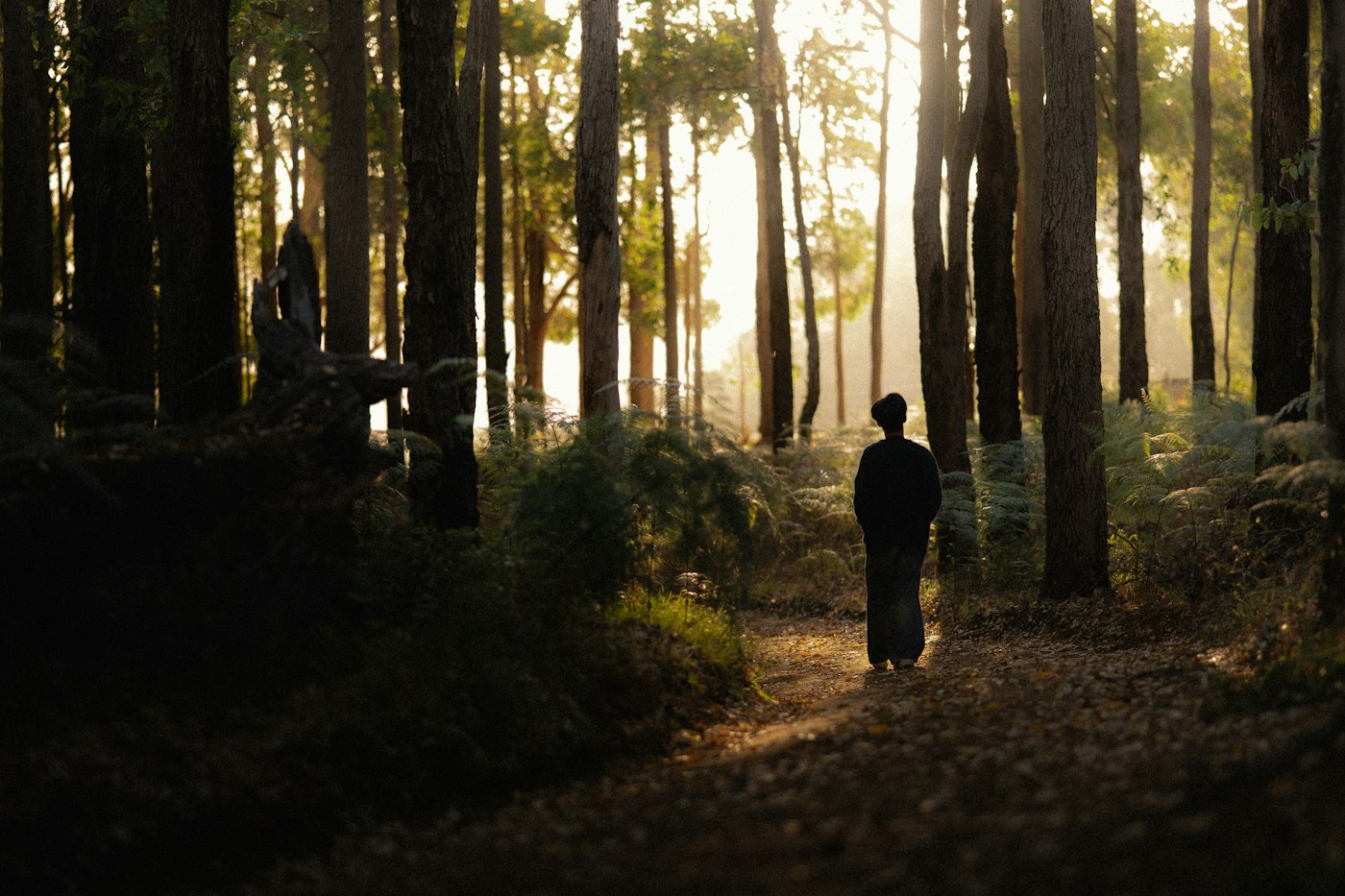
For some people, closing the eyes is relaxing. For others it feels unsafe or simply irritating. Meditation does not require shutting out the room.
A Practice, Not a Performance
Visual anchoring can offer a sense of choice and orientation. This is especially useful in outdoor spaces and for anyone who prefers to remain connected with their surroundings.
For some people, inward focus brings up difficult feelings. A thoughtful practice includes ways to reconnect with the surroundings, choose a different technique, or speak with a professional if needed. This flexibility can make learning more sustainable than a rigid promise to empty the mind.
Try a Short Practice
- Choose a plain object across the room, such as a smooth rock or a plant leaf.
- Keep a soft gaze while noticing your feet, seat and the changing light for four minutes.
- Blink and look away whenever useful.
Try the same exercise beside a campfire from a safe distance or in a bustling café without attempting to block out every distraction.
If the exercise felt neutral, that is a complete result. Repeat it in another setting only if you want to, and notice whether comfort, noise and company change the experience.
What to Keep in Mind
If visual focus brings discomfort, switch to a sound or a gentle movement. Flashing lights and candle flames are not required.
Mindfulness and meditation are usually low risk but are not entirely risk-free. People can experience anxiety or other distress; change techniques or get support rather than pushing through. These practices are not substitutes for needed medical or mental health care.