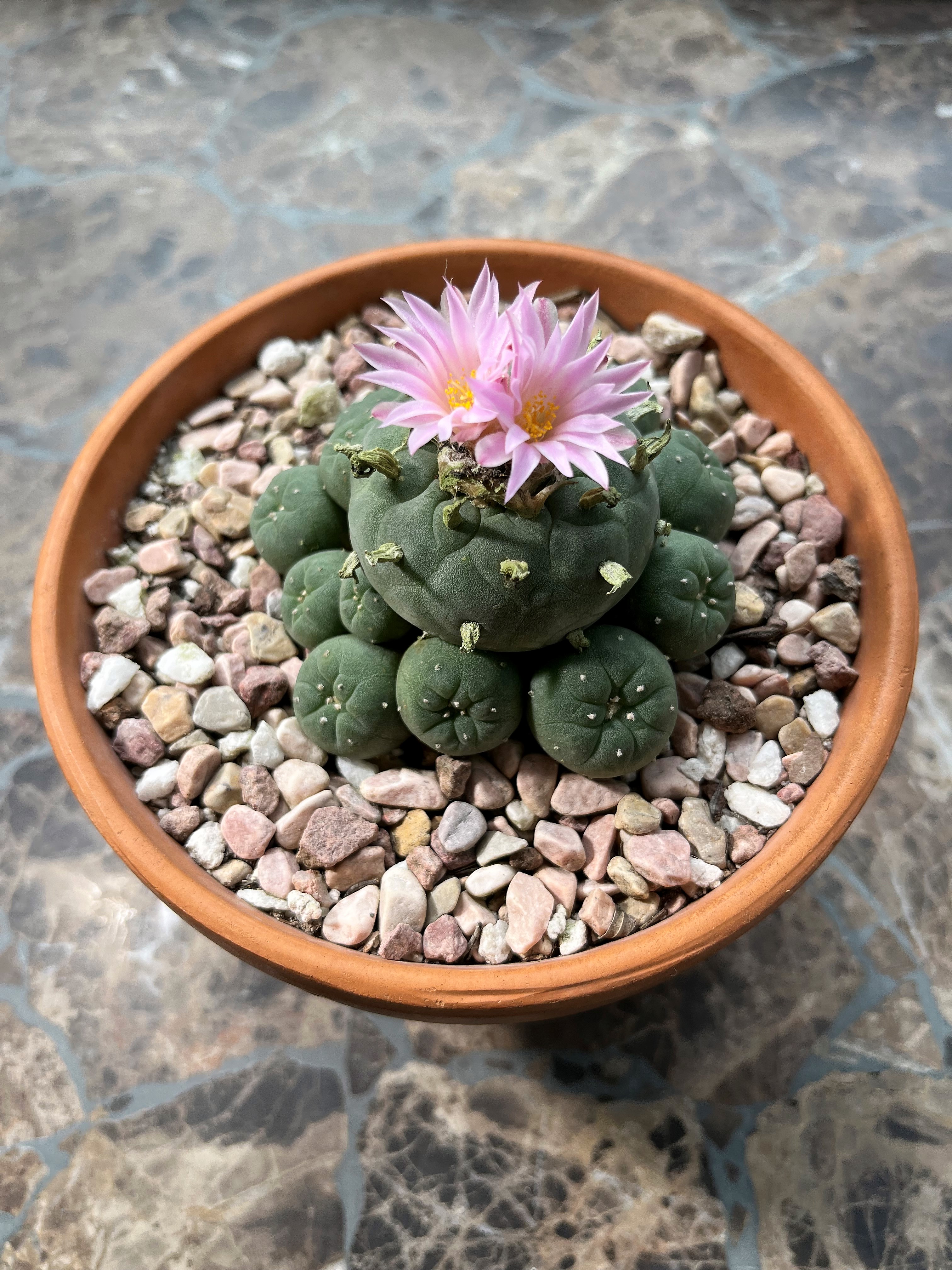
Peyote is more than a cactus and much more than an entry in a list of psychedelics. For many Native American Church members, peyote belongs to living practices of prayer, responsibility and community. Its principal psychedelic compound, mescaline, also interests researchers exploring the relationship between altered consciousness and lasting personal meaning.
A Tradition Carried Across Generations
Peyote ceremonies have deep importance in the Native American Church, where practices and teachings are maintained by communities themselves. Other Indigenous peoples, including Wixárika communities in Mexico, have distinct relationships with peyote and its landscapes. These traditions should not be presented as interchangeable or copied as entertainment by outsiders.
The plant grows slowly, and its ecological future matters. Respect for peyote means considering conservation, habitat and Indigenous stewardship along with any interest in the molecule.
What Mescaline Research Is Finding
A 2021 survey of 452 adults who reported using mescaline in naturalistic settings found that many respondents associated their experiences with psychological insight and positive life changes. The study relied on self-report, so it does not prove that mescaline caused improvements or that it is a clinically effective treatment. But it documents something worthwhile: people describe meaning, connection and personal change as central aspects of their experience.
An older study of regular ceremonial peyote users among Native American Church members did not find significant deficits on the cognitive measures assessed in that particular population. The result should not be inflated into a guarantee of harmlessness, but it challenges simplistic assumptions that traditional ceremonial use necessarily produces measured cognitive decline.
Science and Culture Can Enrich Each Other
Clinical research tends to focus on symptoms and numerical outcomes. Communities may understand healing through obligations, relationships and spiritual identity. A respectful conversation can allow both forms of knowledge to be heard without claiming they are identical.
A Note on Safety
Peyote is a slow-growing plant subject to conservation pressures and legal protections. Research on mescaline does not make wild harvesting or unauthorized use acceptable. Medical and psychological risks remain, and survey studies are not treatment recommendations.