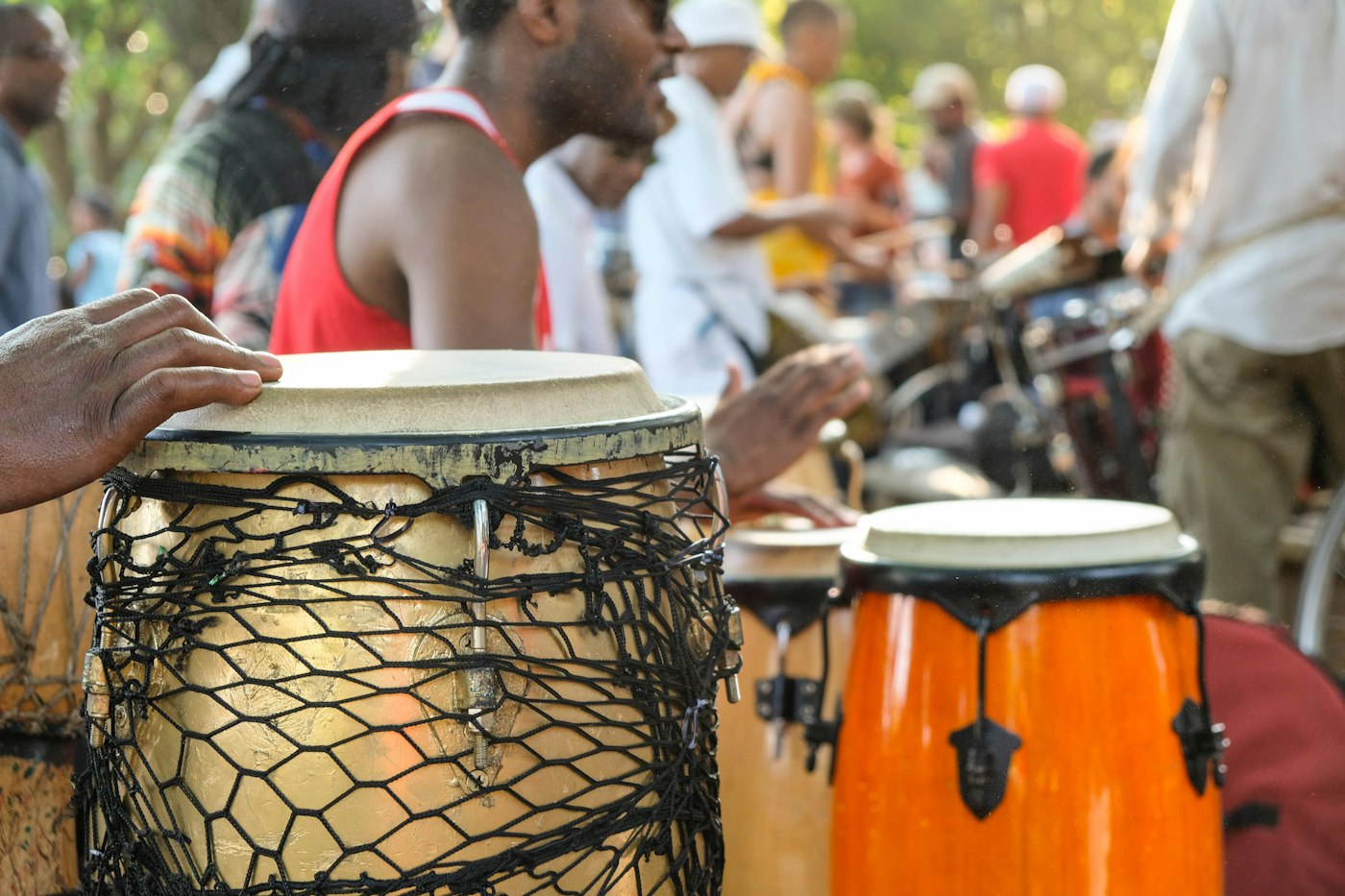
A phone recording can reveal a rhythm you barely noticed while playing. It can also show whether the group's balance is working.
Understanding the Rhythm
Recording is a learning tool, but a community event is not automatically public content. Consent matters before sharing anyone's identifiable participation.
Some drumming practices are rooted in specific cultures and ceremonies. A welcoming community can create original learning exercises while crediting musical influences and avoiding the casual imitation of protected or sacred traditions.
Try the Rhythm
- Ask the circle for permission to record a thirty-second excerpt.
- Place the phone away from the loudest drum, capture one pattern, and listen for whether the pulse, quieter instruments and rests are audible.
Use the recording to discuss one improvement for the next session. Delete or keep it private if participants requested that. You can also record only hands and instruments when people agree.
Record the rhythm as a simple series of taps and rests, then try it once softer. Notice how the musical character changes even if the tempo stays the same.
What to Keep in Mind
Do not publish identifiable faces or voices without informed permission, and do not assume the microphone captures safe listening levels. Keep playback moderate.
Repetitive percussion can be physically or emotionally intense. Keep volumes reasonable, take breaks, protect hearing when needed, and respect cultural contexts. Claims that one beat reliably heals a disease or induces a precise brain state are not established.