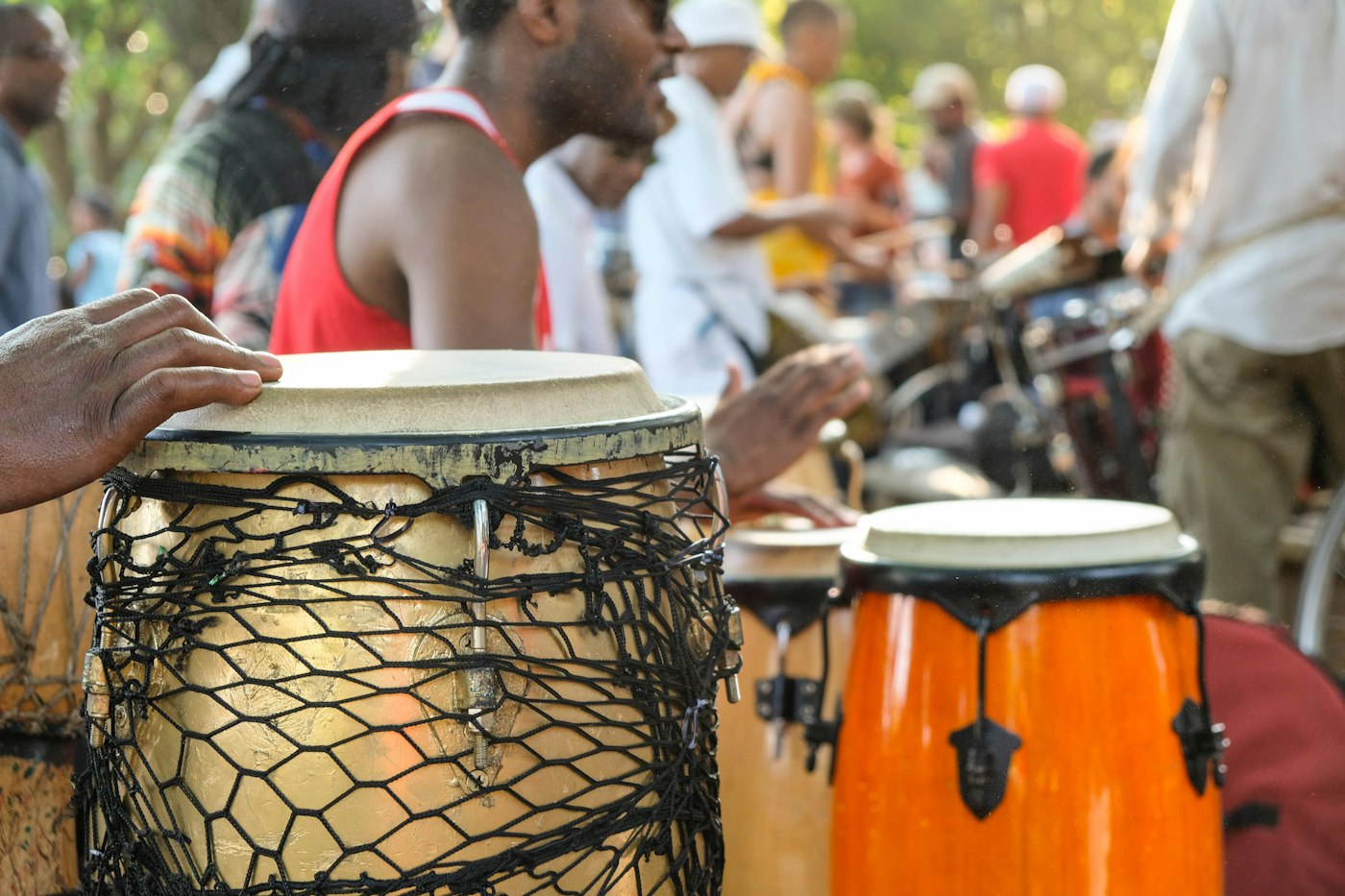
A circle of people who have just met can feel awkward. A simple rhythm game offers a shared task without demanding personal stories too soon.
Looking Beneath the Surface
Turn-taking, prediction and playful mistakes make a low-stakes way to cooperate. A good game reduces social pressure rather than putting one participant on the spot.
A sound experience is not automatically healing or transformative. Its value can be simpler: a chance to pay attention, make something together or remember a moment more vividly.
Sound is also physical space. Chairs, tent walls, wind and the position of speakers change how people hear. Careful setup and quieter alternatives can matter as much as the choice of instruments.
A Small Experiment
Start with one clap pattern that everyone repeats. Pass a short rhythm around the circle, allowing people to tap on their knees instead. Invite anyone to sit out or suggest a variation.
Before moving on, make a note of what felt surprising, what was harder than expected and whether you would like to repeat the experiment. The answer can be no. Curiosity does not create an obligation.
What to Keep in Mind
Keep the tempo slow enough for beginners and avoid calling people out for missed beats. Be mindful of guests with hearing or movement differences.