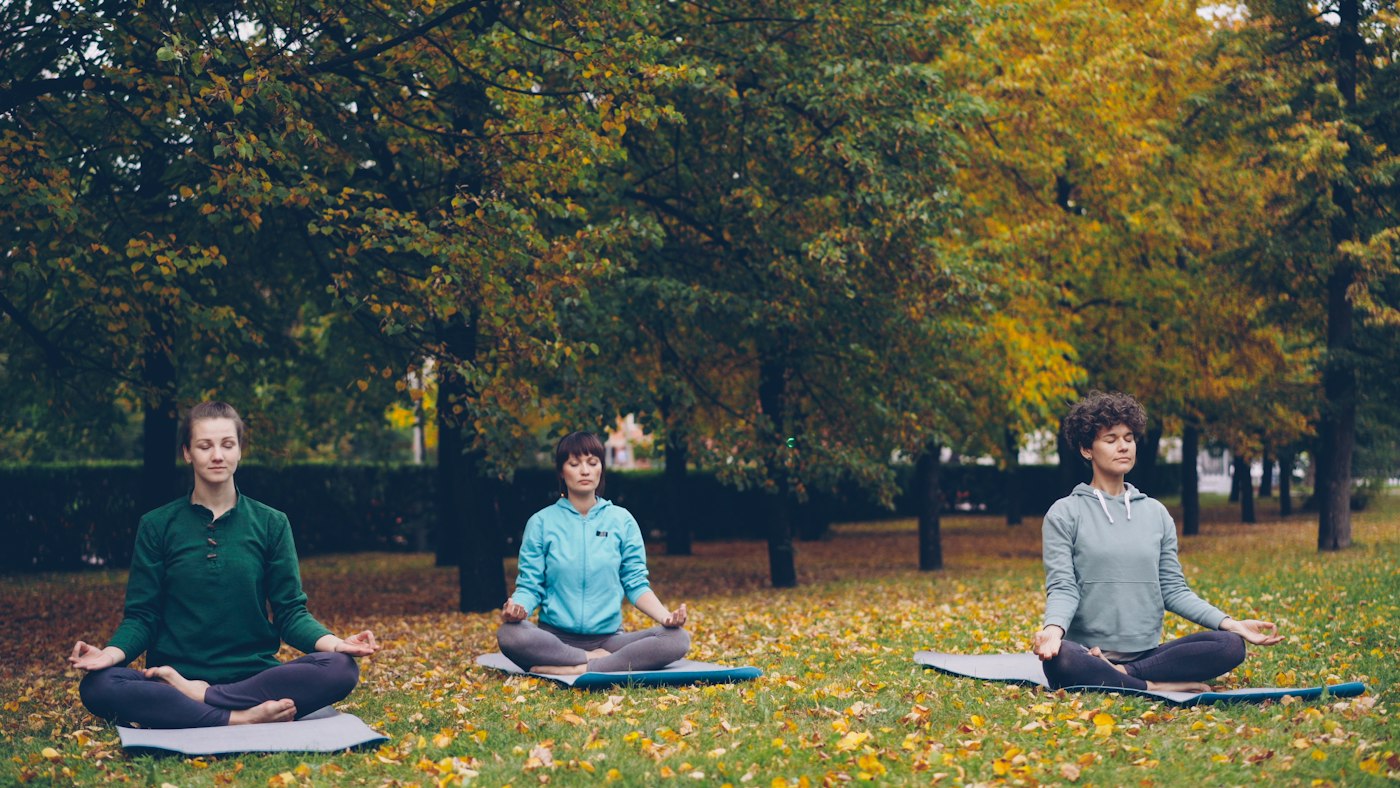
Take a deep breath is common advice, but a huge forced inhale can make some anxious people feel worse. A more skillful question is what kind of breath actually feels comfortable.
The Body Before the Technique
Breathing too much or too rapidly can lower carbon dioxide in the blood and trigger tingling, dizziness or a sense of panic. Relaxation does not require maximum lung volume.
Breathing changes naturally with activity, sleep, temperature and emotion. A comfortable exercise helps people notice those changes instead of trying to override the body with a strict formula.
Try a Gentle Exercise
- Place one hand loosely near your ribs.
- Breathe normally for thirty seconds, then take three soft, unforced breaths.
- Notice the movement rather than trying to pull in more air.
At a workshop, invite people to explore easy breathing rather than competing for the deepest inhale. Explain that a seated, eyes-open alternative is always available.
Notice context as well as breath: heat, body position, exertion and noise can change the experience. A small log can make those differences visible.
What to Keep in Mind
Avoid deliberate rapid hyperventilation or prolonged breath holding, especially around water, heights or while driving. Seek care if symptoms are unexplained or persistent.
Stop if you feel dizzy, faint, tingling, chest discomfort or unusual breathlessness. Avoid forced hyperventilation and breath-hold challenges, especially around water, heights or driving. Seek prompt medical help for severe or unexplained symptoms.