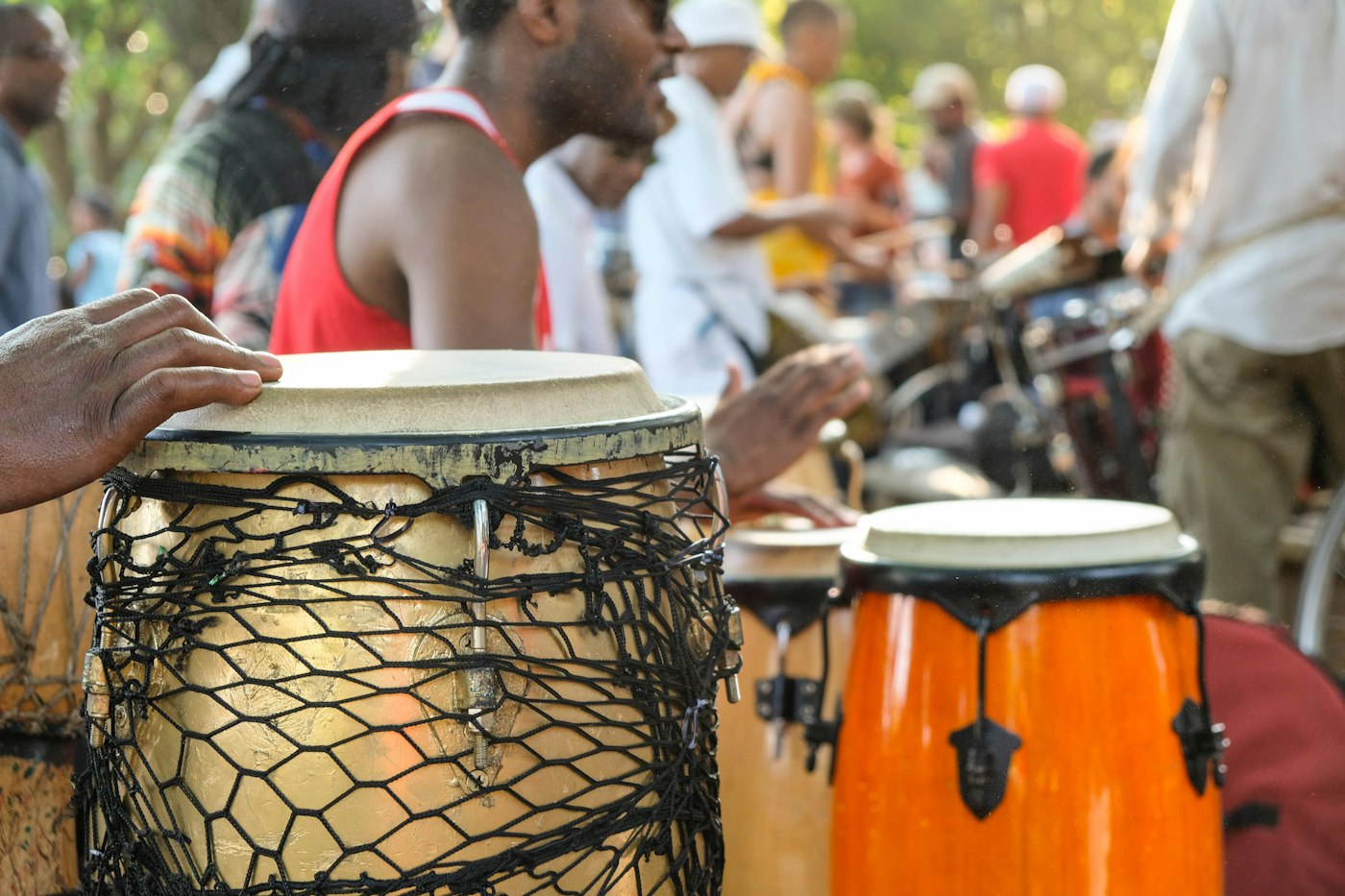
Two alternating sounds can create more momentum than a complicated solo. This simple bass-tone exercise helps players learn how a pattern settles into the body.
Understanding the Rhythm
Hand drums often offer a low center sound and a brighter edge sound. Different drum designs respond differently, so clarity matters more than power or speed.
Rhythm is both musical and social. People learn to hear a shared pulse, leave space, adjust their volume and recover together from mistakes. Those are practical group skills even when no one describes the experience as spiritual.
Try the Rhythm
- Place both hands lightly on a drum or tabletop.
- Play a soft low tone, then a soft higher tap, with equal space between them: boom, tap, boom, tap.
- Count one-two-three-four and repeat for one minute.
Invite half the circle to play on counts one and three and the other half on two and four. Listen for how the groups create one larger pattern. Keep the volume conversational.
If a pattern becomes difficult, slow down and remove one element. A rhythm you can play comfortably with others is more useful in a circle than a complicated figure that leaves everyone behind.
What to Keep in Mind
Avoid striking hard surfaces or hands until they hurt. Some people find repetitive percussion overwhelming, so offer quieter participation.
Repetitive percussion can be physically or emotionally intense. Keep volumes reasonable, take breaks, protect hearing when needed, and respect cultural contexts. Claims that one beat reliably heals a disease or induces a precise brain state are not established.