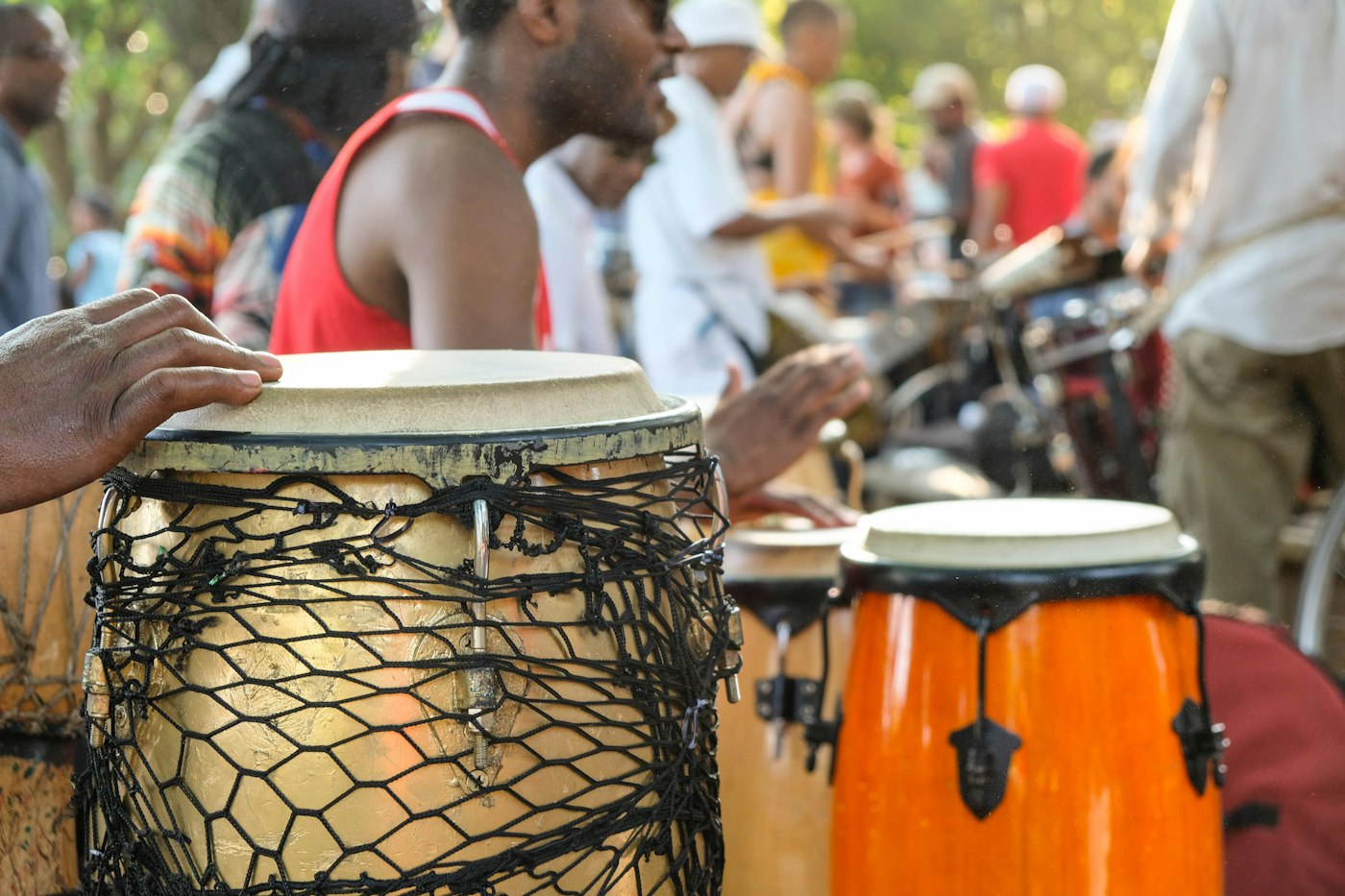
A facilitator's job is not to become the loudest drummer. The real work is keeping the experience welcoming and helping the group start, change and stop together.
Understanding the Rhythm
Clear cues, predictable boundaries and room for contributions make the difference between a shared activity and a performance with unwilling spectators.
Percussion teaches through immediate feedback. One pattern changes when it meets another, and a rest can be as important as a strike. You do not need a professional instrument to notice those relationships.
Try the Rhythm
- Choose one visible cue for start, one for quiet and one for stop.
- Demonstrate each before playing.
- Open with a simple pulse, invite one volunteer to contribute a variation, then bring everyone back to the baseline.
Check in after five minutes: Is the pace comfortable? Can people hear one another? Does anyone want a softer activity? Record the group's preferred cues for next time.
Have a partner listen from several steps away. Ask whether quieter instruments can still be heard and whether people could comfortably talk nearby.
What to Keep in Mind
Do not pressure participants, promise healing, or borrow protected ceremonies as decorations. Have a plan for noise, accessibility and an easy exit.
Repetitive percussion can be physically or emotionally intense. Keep volumes reasonable, take breaks, protect hearing when needed, and respect cultural contexts. Claims that one beat reliably heals a disease or induces a precise brain state are not established.